
Brass Automotive Components: What OEM Buyers Should Specify Before Quoting in 2026
Brass automotive components play a critical role in modern vehicle systems where dimensional uniformity, corrosion resistance, machinability, and reliable connections are essential. From fuel and gas fittings to electrical terminals and precision inserts, brass parts are specified across braking, fuel, CNG, electrical, and transmission systems.
As a tier-2 automotive supplier serving tier-1 customers with certified brass parts, Premi Brasscom International works with OEM buyers who need components made to certificate specifications and customized to exact requirements. This guide helps buyers specify the right brass automotive components before requesting a quote.
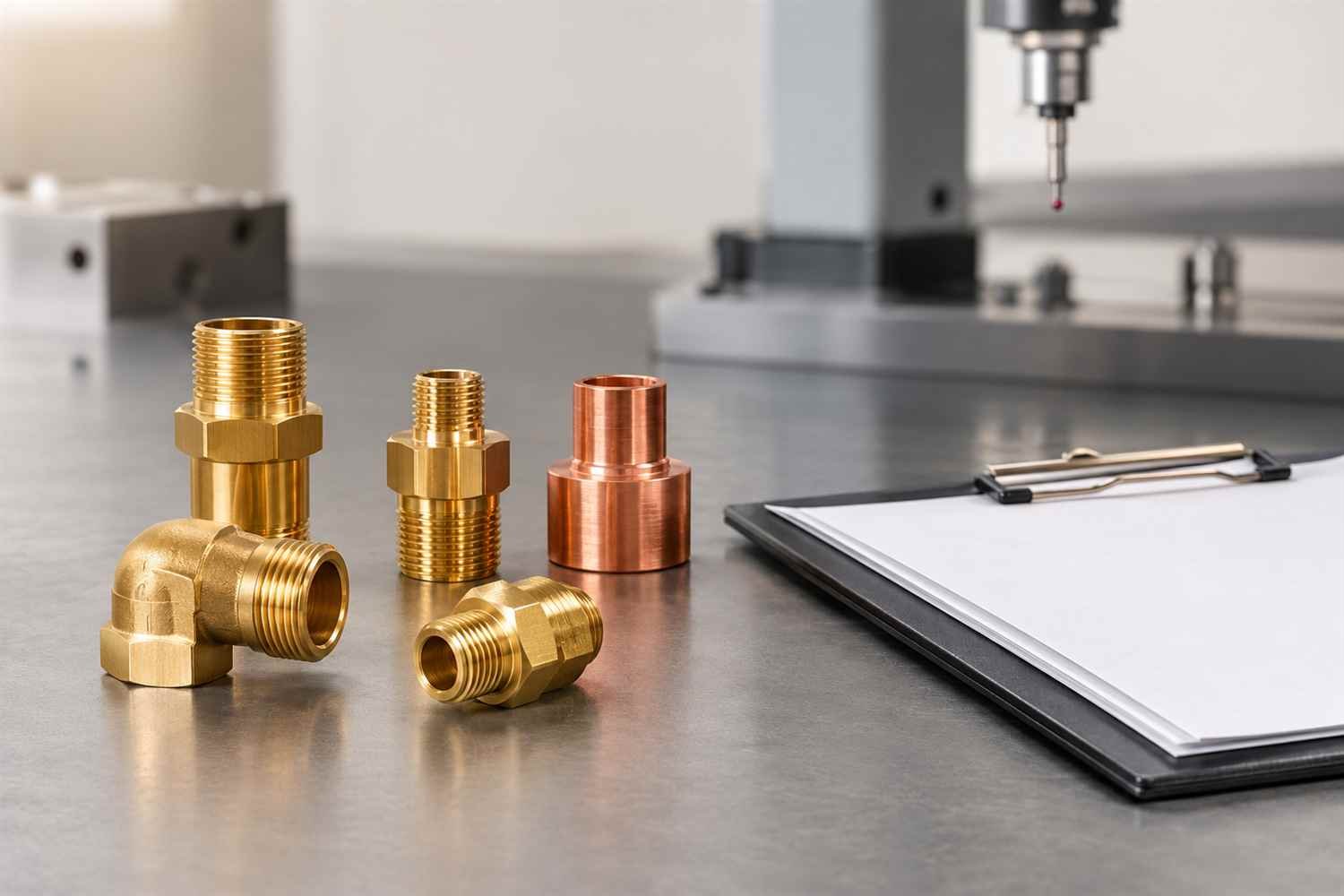
Why Brass for Automotive Components
Brass offers several advantages for automotive applications:
- Precision machining – Brass can be precision-machined into complex shapes and tight tolerances.
- Corrosion resistance – Ideal for fuel, gas, and fluid systems exposed to harsh environments.
- Reliable connections – Excellent for fittings, connectors, and terminals where leak-proof assembly matters.
- Repeated production – Consistent quality across bulk orders.
- Customization – Dimensions, threads, and finishes can be tailored to application requirements.
Common Brass Automotive Applications
Brass parts are used across multiple vehicle systems:
- Fuel systems – Fuel fittings, connectors, and valve components.
- CNG and gas systems – Gas regulator parts, CNG valves, and fuel-system connectors where connection accuracy is critical.
- Electrical systems – Terminals, connectors, and electrical housing components.
- Braking systems – Precision inserts and lock body components.
- Transmission and engine – Bushings, housings, plungers, and knobs.
What Buyers Should Specify Before Quoting
To get accurate quotes and consistent quality, buyers should define:
- Application and operating conditions – Where the component will be used and what conditions it must withstand (temperature, pressure, vibration, exposure to fluids).
- Material specification – Brass grade (e.g., free-cutting brass, lead-free brass for potable water/gas applications), copper, aluminum, SS, or mild steel alternatives.
- Dimensions and drawings – Accurate drawings or specifications to minimize production misunderstandings.
- Thread specification – Thread type (metric, BSP, NPT, UNF), pitch, and tolerance.
- Surface finish – Finish and coating requirements.
- Tolerances – Dimensional and functional tolerances for repeat orders.
- Quantity and packaging – Order quantities, packaging requirements, and delivery schedules.
- Quality standards – Inspection requirements, sample approval before bulk orders, and certification needs.
Emerging Trends in Brass Automotive Sourcing (2026)
Precision, consistency, customization, and efficient production practices are playing a growing role in automotive component sourcing. As vehicle systems become more specialized, buyers are paying closer attention to:
- Specification-driven sourcing – Buyers establish technical specifications before comparing suppliers.
- Supply reliability – On-time delivery, consistent packaging, and production flexibility matter as much as price.
- Quality consistency – Batch-to-batch uniformity in material, tolerances, surface finish, and thread quality.
- Customization – Non-standard shapes and sizes for specific applications.
Evaluating a Brass Components Supplier
When comparing suppliers, buyers should assess:
- Manufacturing capabilities (CNC turning, threading, drilling, grinding, slotting).
- Quality control and inspection processes.
- Certifications (ISO 9001, IATF 16949).
- Production capacity and scalability.
- Customization options.
- Delivery arrangements and lead times.
- Sample approval process.
Conclusion
The right brass automotive component starts with clear specifications. Buyers who define material, dimensions, tolerances, finish, thread type, quantity, and quality standards upfront receive more accurate quotes, consistent quality, and reliable supply. Whether sourcing fittings, connectors, terminals, valves, or precision inserts, specification-first procurement streamlines purchasing and supports production standards.
Premi Brasscom International manufactures brass automotive components at its Dared GIDC Phase III, Jamnagar plant, certified ISO 9001:2015 and IATF 16949, supplying 550+ standard and 300+ custom components to tier-1 automotive customers across Germany, the EU, USA, UK, Czech Republic, UAE, and Saudi Arabia.