
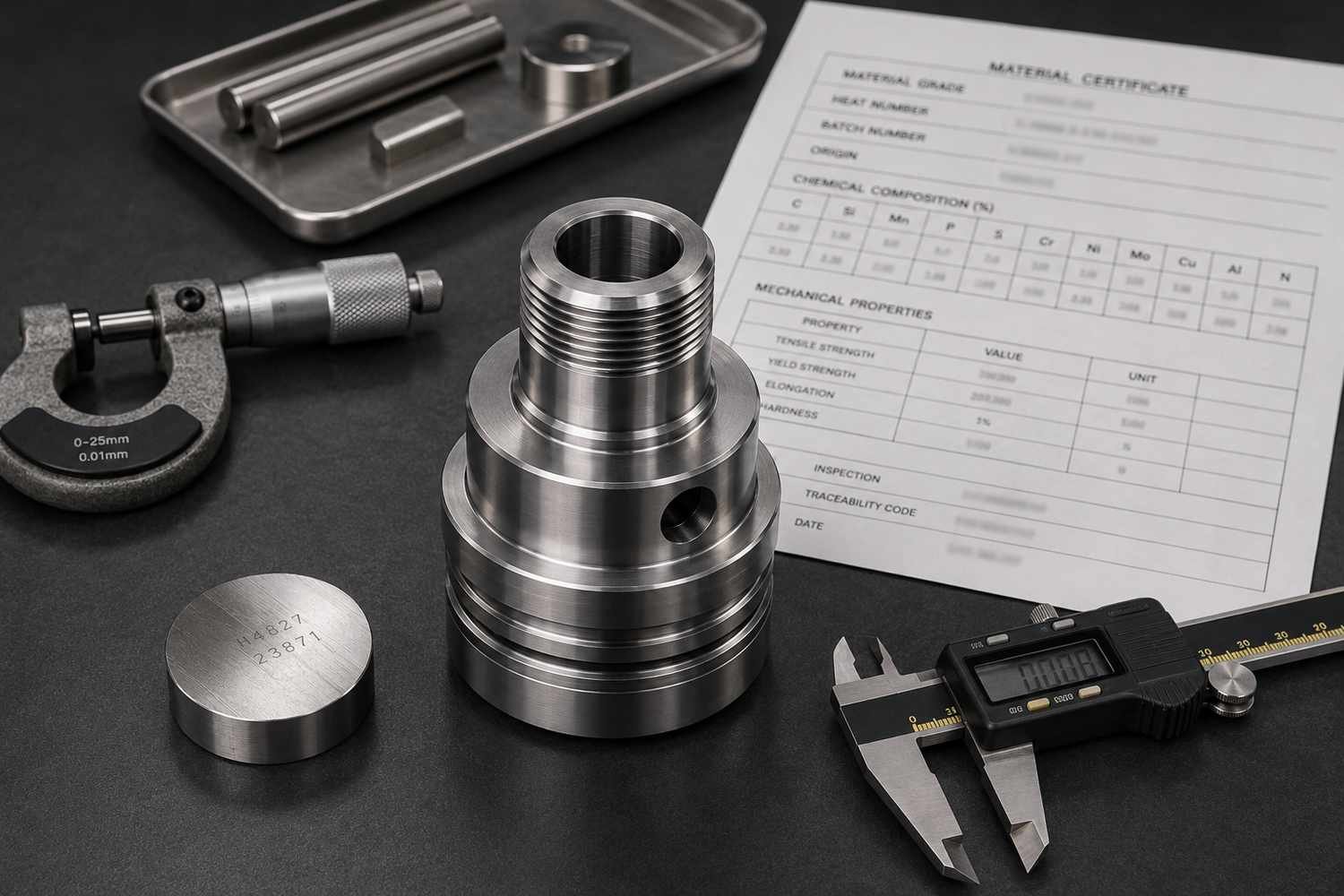
EU Steel Regulation 2026: What Indian Component Suppliers Need to Know
Key takeaway: The European Union’s new Steel Regulation entered into application on 1 July 2026, introducing an 18.3-million-tonne annual duty-free import quota, a 50% out-of-quota duty and new melt-and-pour traceability requirements. Indian manufacturers supplying steel-related products to European automotive and industrial supply chains should understand the regulation, its scope and the importance of steel-origin documentation.
European manufacturing procurement is changing.
For Indian exporters, the traditional sourcing questions have been:
- Can you manufacture the component?
- Can you meet the drawing?
- Can you maintain quality?
- Can you meet the required volume?
- Can you deliver competitively?
Those questions remain critical.
But European buyers are increasingly looking at another issue:
Where did the steel come from, and can its origin be demonstrated?
On 1 July 2026, the EU’s new Steel Regulation entered into application. The regulation is intended to protect the European steel industry from global overcapacity while increasing transparency in the steel supply chain.
For Indian component manufacturers, the most important point is that this is not simply another steel-price regulation.
It introduces a new layer of trade controls and origin-related documentation.
What Is the EU Steel Regulation 2026?
The EU Steel Regulation is a trade measure designed to manage steel imports into the European Union and protect the EU steel industry from the effects of global overcapacity.
The regulation:
- limits duty-free steel imports to 18.3 million tonnes per year
- applies a 50% duty to imports above the relevant quota
- covers imports from non-EEA origins
- introduces a melt-and-pour traceability requirement
- establishes a framework for allocating quotas among trading partners
- allows the European Commission to review the product scope
The regulation entered into application on 1 July 2026.
Why Does the EU Steel Regulation Matter to Indian Manufacturers?
It matters because Indian exporters selling steel products into Europe may face additional quota, documentation and origin considerations.
For a component manufacturer, the impact depends heavily on the HS/CN classification of the exported product.
This distinction is important.
A company should not assume:
“My component contains steel, therefore my finished component automatically falls under the EU Steel Regulation.”
That is not necessarily true.
The regulation applies to products within its defined scope.
Therefore, exporters should verify the actual customs classification and product scope before making a compliance decision.
What Is the 18.3-Million-Tonne EU Steel Quota?
The EU Steel Regulation caps the volume of covered steel imports that can enter the EU duty-free at 18.3 million tonnes per year.
The European Commission says this represents a significant reduction compared with previous quota levels.
Once the applicable quota is exhausted, imports can become subject to a 50% out-of-quota duty.
For exporters, this means the economics of a shipment can depend not only on:
Material cost + manufacturing cost + freight
but potentially also on:
Applicable quota availability + tariff treatment + origin documentation
That makes trade compliance more important in international sourcing.
What Is the “Melt and Pour” Requirement?
The melt-and-pour requirement is a traceability mechanism used to establish where the steel was originally melted and poured.
The European Commission describes it as a key element of the regulation intended to improve transparency in the EU steel supply chain.
This matters because the country from which a product is shipped is not necessarily the same as the country where the underlying steel was originally melted and poured.
For example:
Steel melted and poured in Country A
↓
Processed in Country B
↓
Machined into a component in India
↓
Exported to Europe
The buyer may need to understand the relevant origin information for the steel product under the applicable rules.
This is why documentation becomes important.
Does “Made in India” Automatically Mean Indian Steel Origin?
No. Manufacturing a component in India does not automatically mean that the steel used in it originated in India.
This is one of the most important distinctions for exporters.
A precision component can be:
Manufactured in India
while the raw material may have been:
Produced or melted and poured elsewhere.
Therefore, exporters should maintain accurate records about their raw materials and supplier documentation.
The exact evidence required under the EU Steel Regulation is being implemented through EU measures concerning the melt-and-pour requirement. The Commission consulted stakeholders on the documentary evidence required to demonstrate the country of melt and pour.
What Documentation Could Become Important?
Steel-origin documentation and traceability records are becoming more important for EU-facing supply chains.
Depending on the applicable product and customer requirements, buyers may request information such as:
- material certificate
- heat number
- mill certificate
- steel grade
- supplier information
- batch/lot information
- country of melt and pour
- quantity
- product classification
- supporting origin documentation
The exact documentary requirements should be confirmed against the applicable EU implementing rules and customs requirements.
Do not treat this list as a universal legal checklist for every component.
Does the Regulation Apply to Finished Automotive Components?
Not automatically. The answer depends on the product’s customs classification and whether it falls within the regulation’s covered product categories.
This is particularly important for precision component manufacturers.
A finished:
- steel shaft
- fastener
- machined pin
- automotive component
- stainless-steel component
may have a different customs classification from the raw steel used to manufacture it.
Therefore:
Material content alone does not determine regulatory scope.
Exporters should identify the relevant HS/CN code and verify whether the product is covered.
Why Is the EU Reviewing the Product Scope?
Because the European Commission is already examining whether additional steel products should be included in the regulation.
On 30 July 2026, the Commission launched a targeted consultation on the first product-scope review.
The review specifically includes products such as:
- certain cast-iron tubes and pipes
- non-alloy and alloy steel wire
- stainless-steel wire
- certain forged bars
The consultation deadline is 30 September 2026, with the Commission expected to finalise its assessment by 31 December 2026.
This is particularly relevant for manufacturers and exporters working with steel wire, stainless wire and forged-bar inputs.
Why Should Indian Precision Manufacturers Watch the Scope Review?
Because changes to the covered product list could affect upstream materials, sourcing decisions and documentation requirements.
Imagine a component manufacturer that purchases:
Steel wire
↓
Cold forming / machining
↓
Precision component
↓
European Tier-1 customer
If the raw steel product becomes subject to additional trade requirements, the supplier may need to understand its upstream material origin and documentation more carefully.
That does not mean the finished component itself automatically becomes regulated.
It means:
upstream steel sourcing can become strategically important.
How Does the EU–India FTA Change the Picture?
The EU–India FTA could improve market access for Indian exporters, but it does not eliminate the need to understand the EU’s separate steel trade rules.
The European Commission says the negotiated agreement would remove tariffs on most iron and steel products over defined transition periods, with many products moving to zero tariffs over time.
The agreement also provides significant tariff liberalisation for car parts, with most tariffs scheduled for removal over 5–10 years.
However, the European Commission states that the published FTA text is still subject to legal revision and will become binding only after signature and completion of each side’s internal procedures.
So exporters should not yet treat the FTA as if every negotiated tariff benefit is already operational.
Could the EU Steel Regulation and EU–India FTA Work Together?
Yes, but they address different issues.
The FTA concerns:
Market access and tariffs between India and the EU.
The Steel Regulation concerns:
Management of steel imports, quotas, trade protection and traceability.
An Indian exporter therefore needs to consider both:
FTA preference eligibility
and
EU steel-regulation requirements
where applicable.
A preferential tariff under an FTA does not automatically mean that every separate trade-control requirement disappears.
What Should an Indian Steel Component Exporter Check Before Shipping to Europe?
The first step should be product classification, not guessing from the material name.
A practical checklist is:
| Check | Question |
|---|---|
| HS/CN code | What is the correct customs classification? |
| Product scope | Is the product covered by the EU Steel Regulation? |
| Material | What steel grade is being used? |
| Steel origin | Where was the steel produced? |
| Melt & pour | Can the relevant origin be demonstrated? |
| Documentation | Are certificates and supporting records available? |
| Quota | Does the applicable tariff quota have availability? |
| Tariff | What duty applies to this shipment? |
| FTA | Is the India–EU FTA applicable and in force for the shipment date? |
| Customer requirements | Does the European buyer require additional documentation? |
| Traceability | Can the material be linked to the supplied batch? |
This is a better way to approach European export compliance than simply asking:
“What is the current steel price?”
What Should OEMs and Tier-1 Buyers Ask Indian Suppliers?
European OEMs and Tier-1 suppliers should evaluate not only component quality but also the supplier’s ability to provide reliable material information.
Useful questions include:
- What material grade do you use?
- Who supplies the raw material?
- Can you provide the material certificate?
- Can the material be traced to a production batch?
- Can you identify the steel mill where required?
- Can you provide the relevant melt-and-pour information where applicable?
- What is the component’s HS/CN classification?
- Can you provide export documentation?
- Can you support recurring shipments?
- Can you respond quickly to documentation requests?
This is especially relevant when the customer is integrating the component into a wider European supply chain.
Why Is Traceability Becoming a Competitive Advantage?
Traceability reduces uncertainty for the buyer.
Suppose two suppliers offer the same component at almost the same price.
Supplier A provides:
- component
- invoice
- packing list
Supplier B provides:
- component
- material certificate
- heat/batch information
- traceability records
- organised documentation
- consistent export information
For a procurement team dealing with increasingly complex European trade requirements, Supplier B may be easier to qualify and manage.
That does not automatically make Supplier B the better supplier.
But documentation discipline can reduce procurement risk.
What About Stainless Steel?
Stainless steel deserves particular attention because the European Commission is currently reviewing whether certain stainless-steel wire products should be included in the regulation’s scope.
The current product-scope consultation specifically lists stainless wire among the products under review.
For suppliers working with stainless-steel precision components, the immediate action is not to assume that every stainless component is affected.
The practical action is:
Monitor the scope review and verify the classification of relevant raw materials and finished products.
What About Steel Fasteners and Precision Turned Components?
The impact depends on the specific product classification rather than simply the fact that the component is made from steel.
A precision turned component manufactured from steel can have a customs classification different from the steel bar from which it was machined.
Therefore, the exporter should distinguish between:
Raw material classification
and
Finished component classification.
This distinction should be checked with the exporter’s customs adviser, freight forwarder or relevant trade-compliance professional where necessary.
What Does This Mean for Automotive OEM Sourcing?
European automotive buyers may increasingly evaluate suppliers based on both manufacturing performance and supply-chain transparency.
A simplified sourcing evaluation can become:
Quality
Cost
Capacity
Delivery
Material traceability
Trade compliance
This is particularly relevant for components manufactured from steel and stainless steel.
Does This Create an Opportunity for Indian Suppliers?
Yes, but the opportunity is not simply “India can replace European steel suppliers.”
That would be an unsupported and unrealistic claim.
The better opportunity is:
Indian component suppliers that can combine competitive manufacturing with reliable documentation can become easier for European buyers to evaluate and manage.
That means suppliers should focus on:
- engineering capability
- dimensional consistency
- quality
- material documentation
- traceability
- capacity
- delivery reliability
- export documentation
- responsive communication
What Should Indian Manufacturers Do Now?
1. Map your steel inputs
Identify the steel grades and major suppliers used for export components.
2. Check product classifications
Review the HS/CN classification of both raw materials and finished products.
3. Strengthen material records
Maintain certificates and batch information in an organised way.
4. Understand melt-and-pour information
Ask relevant steel suppliers whether the required origin information can be provided.
5. Monitor the EU scope review
The current consultation runs until 30 September 2026.
6. Review customer requirements
European OEMs and Tier-1 suppliers may request information beyond the minimum legal requirement.
7. Do not overclaim compliance
If a requirement has not been verified for a particular product, do not claim that the product is “EU Steel Regulation compliant.”
What Does This Mean for Premi Brasscom International?
Premi Brasscom International manufactures precision metal components in:
- brass
- copper
- aluminium
- steel
- stainless steel
for automotive, electrical, electronic and industrial applications.
That makes European developments in steel trade and supply-chain transparency commercially relevant.
However, the correct positioning is important.
Premi should not claim:
“All Premi steel components comply with the EU Steel Regulation.”
That would require product-by-product classification and regulatory verification.
A more credible position is:
Premi Brasscom International can evaluate customer drawings and material requirements for precision metal component manufacturing, while European buyers can specify the material, documentation and traceability requirements applicable to their programme.
The practical supplier workflow is:
Customer drawing
↓
Material specification
↓
Manufacturing feasibility
↓
Raw-material sourcing
↓
Production
↓
Inspection
↓
Traceability / documentation
↓
Export
This is the language procurement teams understand.
What Should a European Buyer Ask Before Sourcing Steel Components From India?
European buyers should verify product scope and documentation before assuming the new regulation affects a specific component.
A practical RFQ should include:
- component drawing
- material grade
- annual volume
- monthly volume
- surface finish
- tolerance requirements
- inspection requirements
- packaging
- delivery destination
- expected documentation
- applicable customs classification if known
The supplier can then evaluate:
Feasibility → material → process → inspection → documentation → capacity → quotation
Frequently Asked Questions
What is the EU Steel Regulation 2026?
The EU Steel Regulation is a trade measure intended to protect the EU steel market from global overcapacity. It introduced an 18.3-million-tonne annual duty-free quota and a 50% out-of-quota duty, together with steel-origin traceability requirements.
When did the EU Steel Regulation enter into application?
The regulation entered into application on 1 July 2026.
Does the EU Steel Regulation apply to every steel component?
No. Application depends on whether the particular product falls within the regulation’s defined product scope and customs classification.
What is melt-and-pour traceability?
It is a requirement designed to establish where the steel was originally melted and poured, supported by documentary evidence.
Does manufacturing a steel component in India make it Indian steel?
No. The component may be manufactured in India using steel that originated elsewhere. Manufacturing location and steel origin are different concepts.
Will the EU Steel Regulation affect Indian exporters?
Potentially, depending on the products exported and their classification. Exporters of covered steel products need to consider quota availability, tariff treatment and required documentation.
What is the EU steel import quota?
The EU Steel Regulation establishes an annual duty-free import volume of 18.3 million tonnes for covered steel products.
What happens after the applicable quota is exhausted?
Covered imports above the applicable quota can face a 50% out-of-quota duty.
Are stainless-steel products affected?
Some stainless-steel products are within the current framework or under review. The Commission’s July 2026 product-scope consultation specifically includes certain stainless-steel wire products.
Is the EU–India FTA already in force?
Not yet. The European Commission says the published agreement text may still undergo legal revision and becomes binding only after signature and completion of internal procedures.
Could the EU–India FTA improve access for Indian steel products?
Yes. The negotiated FTA provides for tariff elimination or reductions across many iron and steel products, but the benefits apply according to the agreement’s schedules and only once the agreement becomes applicable.
What should an Indian component supplier do now?
Review product classification, material sourcing, documentation, traceability and customer requirements, and monitor the EU’s ongoing steel-regulation scope review.
Conclusion
The European steel market is becoming more controlled and more transparent.
The EU Steel Regulation entered into application on 1 July 2026, establishing an 18.3-million-tonne duty-free quota, a 50% out-of-quota duty and new requirements around steel-origin traceability.
At the same time, the European Commission is already reviewing whether additional products—including certain stainless-steel wire and forged-bar categories—should be included in the regulation’s scope. That consultation is open until 30 September 2026.
For Indian precision-component manufacturers, the lesson is not to panic.
It is to become more disciplined about:
Material
→ Classification
→ Origin
→ Traceability
→ Documentation
→ Customer requirements
European automotive and industrial buyers will continue to evaluate suppliers on quality, cost, capacity and delivery.
Increasingly, however, supply-chain transparency can become part of the supplier-selection equation.
Premi Brasscom International manufactures precision metal components in brass, copper, aluminium, steel and stainless steel for automotive, electrical, electronic and industrial applications.
International buyers can share a component drawing, material specification or sample for manufacturing-feasibility evaluation.
Primary source
European Commission — EU Steel Regulation Factsheet
Use for:
- 18.3M-tonne quota
- quota allocation
- 50% out-of-quota duty
- FTA/non-FTA treatment
Current scope development
European Commission — First Product Scope Review of EU Steel Regulation
Use for:
- 30 July 2026 consultation
- 30 September 2026 deadline
- potential additional products
- December 2026 review
Melt-and-pour documentation
European Commission — Melt and Pour Traceability Consultation
Use for:
- documentary evidence
- traceability
- origin of melt and pour
- implementation process
EU–India FTA
European Commission — EU–India FTA Main Benefits
Use for:
- iron and steel tariff liberalisation
- automotive tariff changes
Legal status of FTA
European Commission — EU–India FTA Agreement Texts
Use for:
- conclusion date
- legal revision
- signature
- internal procedures
- entry into force