
India Auto Ancillary Industry FY27: What 8–9% Growth Means for OEM Sourcing
India’s auto ancillary industry is expected to grow 8–9% in FY2026–27, with the market projected to reach approximately ₹10.68 lakh crore. For OEM and Tier-1 procurement teams, the opportunity is not simply a larger Indian market—it is a deeper supplier ecosystem driven by OEM demand, localisation, higher component content and global sourcing.
India’s automotive component industry is entering FY2026–27 with a stronger manufacturing base than it had a few years ago.
The latest industry outlook points toward continued expansion, but the more interesting question for procurement professionals is not simply:
“How fast is India’s auto-component industry growing?”
It is:
“What does that growth mean if we are looking for qualified Indian suppliers?”
That distinction matters.
A growing industry can create more capacity, more suppliers and more sourcing opportunities. But for an OEM or Tier-1 buyer, growth only becomes commercially useful when individual suppliers can meet the required specifications, quality standards, production volumes and delivery schedules.
Recent industry estimates put FY2026–27 auto-ancillary growth at approximately 8–9%, with the market expected to rise from around ₹9,835 billion in FY2025–26 to ₹10,681 billion in FY2026–27. The key drivers identified include healthy OEM demand, increasing component content per vehicle, replacement demand, higher localisation and expanding global sourcing opportunities.
What is the expected growth of India’s auto ancillary industry in FY2027?
India’s auto ancillary industry is expected to grow approximately 8–9% in FY2026–27, according to the latest CareEdge outlook reported in August 2026.
The projected market size is approximately:
| Indicator | FY2025–26 | FY2026–27 outlook |
|---|---|---|
| Auto ancillary market | ₹9,835 billion | ₹10,681 billion |
| Expected growth | — | 8–9% |
| Main demand driver | OEM + replacement | OEM + replacement + global sourcing |
| Structural drivers | Localisation | Localisation + higher content + exports |
This is not a forecast that every component manufacturer will grow at 8–9%.
The figure describes the broader industry.
For an individual supplier, growth will depend on product category, customer exposure, manufacturing capability, capacity, technology and export competitiveness.
That is important for buyers because industry growth should not be confused with supplier qualification.
Why is India’s auto ancillary industry growing?
The current growth outlook is being supported by OEM demand, increasing component content per vehicle, localisation and expanding global sourcing opportunities.
These drivers are more important than simply looking at vehicle volumes.
Modern vehicles contain more components and more technology than previous generations.
Even when vehicle volumes grow moderately, the value and complexity of components per vehicle can increase because of:
- Electronics
- Safety systems
- Sensors
- Powertrain changes
- Electrification
- Emissions requirements
- Lightweighting
- Connectivity
- Advanced manufacturing
This creates opportunities for suppliers that can manufacture higher-specification components consistently.
How large is India’s auto-component industry?
India’s auto-component industry recorded turnover of approximately ₹7.60 lakh crore, or US$85.9 billion, in FY2025–26, representing 12.7% growth over the previous year.
ACMA’s FY2025–26 industry review also reported that supplies to OEMs increased 16.3% to ₹6.63 lakh crore, while exports reached approximately US$24 billion.
That OEM number is particularly relevant to procurement teams.
A growing OEM-supply ecosystem indicates that component manufacturers are increasingly participating in serial-production automotive programmes.
But again, the industry figure should be treated as a market signal rather than proof that any particular supplier can meet an OEM’s requirements.
What does higher OEM demand mean for component sourcing?
Higher OEM demand can increase the need for suppliers that can provide repeatable production, reliable capacity and controlled quality rather than simply low-cost manufacturing.
OEM programmes are different from one-off industrial orders.
A supplier may successfully manufacture a small development batch and still struggle when the customer moves to serial production.
Procurement teams should therefore evaluate:
- Manufacturing capacity
- Machine availability
- Process capability
- Inspection capability
- Material availability
- Production planning
- Preventive maintenance
- Traceability
- Quality documentation
- Delivery performance
The question should be:
Can this supplier support the programme after nomination?
Not simply:
Can this supplier produce my sample?
Why is localisation important to India’s auto-component industry?
Localisation is important because Indian automotive manufacturers are trying to increase domestic value addition while reducing exposure to imported components and global supply disruptions.
The Ministry of Heavy Industries describes the PLI-Auto scheme as a mechanism to promote manufacturing of Advanced Automotive Technology products and facilitate deeper localisation and domestic and global supply-chain creation.
The government has also reported substantial investment under the scheme.
Through 31 March 2026, approved applicants had reported ₹44,326 crore of investment, along with ₹52,414 crore in incremental sales and 67,820 jobs generated.
The significance for component sourcing is straightforward:
More localised vehicle and technology production creates demand for supporting suppliers.
Does localisation mean India can manufacture every automotive component?
No. India’s localisation progress is significant, but the country still imports substantial quantities of automotive components and advanced technologies.
ACMA’s FY2025–26 data shows auto-component imports of approximately US$25.4 billion, compared with exports of about US$24 billion.
That means the opportunity is not:
“Everything can now be sourced from India.”
The better interpretation is:
“More parts of the automotive supply chain are becoming commercially viable for Indian manufacturing.”
For procurement teams, this means component-by-component evaluation remains essential.
What is driving global sourcing from India?
Global OEM and Tier-1 sourcing from India is being supported by India’s expanding manufacturing ecosystem, cost competitiveness, localisation, technology investment and export capability.
Recent industry commentary identifies global sourcing opportunities as one of the drivers of the FY2027 auto-ancillary outlook.
ACMA has also highlighted India’s ambition to become a global export hub, supported by engineering capabilities, cost advantages and quality.
This is particularly relevant to European and other international procurement teams looking to diversify supplier bases.
But international sourcing requires more than a competitive quotation.
It requires confidence in:
- Technical compliance
- Quality
- Documentation
- Traceability
- Capacity
- Logistics
- Communication
- Change management
- Commercial reliability
What should OEM buyers check before sourcing auto components from India?
OEM buyers should evaluate the supplier’s ability to deliver the specific component consistently rather than selecting a manufacturer solely on price or company size.
A practical supplier evaluation framework is:
| Evaluation area | What the buyer should verify |
|---|---|
| Drawing capability | Can the supplier manufacture the required geometry? |
| Material | Can the required grade be sourced and controlled? |
| Tolerance | Can critical dimensions be maintained repeatedly? |
| Surface finish | Can the required finish be achieved consistently? |
| Inspection | Are appropriate measurement methods available? |
| Capacity | Can the supplier support programme volume? |
| Quality | Is the required quality system established? |
| Traceability | Can material and production batches be traced? |
| Development | Can samples be developed within the required timeline? |
| Production | Can serial production be maintained? |
| Delivery | Can the required schedule be maintained? |
| Export | Can international documentation and logistics be handled? |
This approach is especially useful when comparing smaller and mid-sized manufacturers.
Why should buyers look beyond the unit price?
Because the cheapest quotation is not necessarily the lowest total sourcing cost.
For international procurement, the relevant calculation is closer to:
Component price
Tooling
Packaging
Freight
Duties and taxes where applicable
Inspection costs
Supplier-development costs
Inventory impact
Quality risk
=
Total landed cost
A supplier that quotes 5% less but produces inconsistent parts can ultimately cost more through:
- Rejections
- Sorting
- Production interruptions
- Expedited freight
- Additional inspection
- Rework
- Supplier-development effort
This is why procurement teams should compare total landed cost and supply risk, not only piece price.
How does higher component content affect Indian suppliers?
Higher component content per vehicle creates opportunities for suppliers that can manufacture increasingly specialised parts with consistent quality and repeatability.
A vehicle can contain hundreds or thousands of individual components and subcomponents.
As vehicle technology changes, suppliers may face requirements for:
- Tighter tolerances
- More complex geometries
- Better surface finishes
- Higher material performance
- More traceability
- Greater process consistency
- More documentation
For precision metal manufacturers, this can create opportunities in areas such as:
- Turned components
- Pins
- Bushes
- Shafts
- Terminals
- Connectors
- Fasteners
- Inserts
- Housings
- Precision aluminium parts
- Brass components
- Copper components
- Steel components
- Stainless-steel components
The exact opportunity depends on the customer’s engineering requirements.
What does EV growth mean for conventional component suppliers?
EV growth changes the component mix, but it does not eliminate the need for precision mechanical and electrical components.
Electric vehicles introduce new systems such as:
- Electric motors
- Power electronics
- Battery systems
- Charging systems
- Thermal management
- Controllers
- Sensors
At the same time, EVs still require many mechanical and electrical components.
Recent research on Indian EV localisation highlights motors, power electronics, thermal systems, chargers and control units as important areas beyond battery manufacturing.
For a precision-component supplier, the right question is therefore not:
“Are EVs replacing our market?”
It is:
“Which components in the new vehicle architecture match our manufacturing capabilities?”
That is a much more useful sourcing and product-development question.
How should an OEM qualify an Indian precision component supplier?
Supplier qualification should combine technical evaluation, quality assessment, production validation and commercial review.
A practical process is:
Step 1: RFQ review
Review:
- Drawing
- Material
- Tolerance
- Surface finish
- Annual volume
- Delivery requirement
Step 2: Manufacturing feasibility
Evaluate:
- Machine capability
- Tooling
- Process sequence
- Secondary operations
- Inspection requirements
Step 3: Sample development
Produce samples according to the agreed specification and inspection requirements.
Step 4: Quality validation
Depending on customer requirements, this may include:
- First Article Inspection
- Control plan
- Process documentation
- Dimensional reports
- Material certificates
- PPAP where required
Step 5: Capacity validation
Confirm that the supplier can support the expected production volume.
Step 6: Serial-production approval
Move to production only after the agreed customer qualification requirements have been satisfied.
This approach reduces the risk of choosing a supplier based only on a quotation.
What should an RFQ for Indian auto-component suppliers contain?
A good RFQ should contain enough engineering and commercial information for the supplier to evaluate manufacturability and provide a comparable quotation.
At minimum, include:
- Component drawing
- Drawing revision
- Material grade
- Annual quantity
- Monthly or batch quantity
- Critical dimensions
- Tolerances
- Surface finish
- Heat treatment or plating requirements
- Inspection requirements
- Applicable standards
- Packaging requirements
- Delivery location
- Development timeline
- SOP date
- Required quality documentation
A detailed RFQ also helps the buyer compare suppliers on the same assumptions.
What does FY2027 growth mean for Tier-1 suppliers?
For Tier-1 suppliers, industry growth can create opportunities to expand their Indian sourcing base, but supplier capacity and consistency become increasingly important as programme volumes increase.
A Tier-1 supplier should ask:
- Can the supplier support our annual volume?
- Is there spare capacity?
- How quickly can capacity be expanded?
- What are the supplier’s bottleneck processes?
- How is preventive maintenance handled?
- How are raw-material risks managed?
- What happens if demand increases by 30–50%?
- Is there a second source for critical operations?
The strongest supplier relationship is not simply one where the supplier wins the initial RFQ.
It is one where the supplier can remain reliable when the customer’s volume changes.
What does this growth mean for Indian precision metal component manufacturers?
The FY2027 outlook creates an opportunity for capable precision manufacturers, particularly where automotive programmes require repeatable metal components and reliable production.
But suppliers should avoid a common mistake:
Marketing themselves as an “OEM supplier” without proving component-level capability.
A better approach is to demonstrate:
- What materials you process
- What component geometries you manufacture
- What tolerances you can support
- How components are inspected
- How traceability is maintained
- What production capacity is available
- How samples are developed
- What documentation can be provided
For procurement professionals, evidence is more useful than broad marketing claims.
How does India’s auto-component growth affect global sourcing strategy?
The stronger Indian supplier ecosystem gives global buyers another sourcing option, but supplier diversification should be based on capability and risk rather than geography alone.
A global sourcing team should compare India against existing locations using:
| Factor | Questions |
|---|---|
| Cost | What is the total landed cost? |
| Quality | What is the supplier’s demonstrated quality performance? |
| Capacity | Can production scale with demand? |
| Lead time | What is the development and production lead time? |
| Logistics | How reliable is the supply route? |
| Materials | Are critical materials readily available? |
| Engineering | Can the supplier support drawing changes? |
| Traceability | Can production and material lots be tracked? |
| Risk | What are the major supply-chain vulnerabilities? |
| Strategic fit | Can the supplier support a long-term programme? |
This makes India a sourcing decision rather than simply a location preference.
What does this mean for Premi Brasscom International?
For Premi Brasscom International, the relevant opportunity is the growth of automotive and industrial demand for precision metal components and the increasing need for qualified Indian suppliers.
Premi Brasscom International manufactures precision metal components in brass, copper, aluminium, steel and stainless steel for automotive, electrical, electronic and industrial applications.
For an OEM or Tier-1 buyer, the practical sourcing pathway is:
Drawing / RFQ
↓
Manufacturing feasibility
↓
Material and process evaluation
↓
Quotation
↓
Sample development
↓
Inspection
↓
Customer approval
↓
Serial production
The important question is not whether a supplier uses terms such as “automotive,” “EV” or “OEM.”
The important question is:
Can the supplier manufacture the required component consistently to the customer’s specification, quantity and quality requirements?
That is the standard that turns India’s industry growth into a reliable supply chain.
Frequently Asked Questions About India’s Auto Ancillary Industry
What is the expected growth of India’s auto ancillary industry in FY2027?
The Indian auto ancillary industry is expected to grow approximately 8–9% in FY2026–27, with the market projected to reach around ₹10.68 lakh crore.
What is driving India’s auto ancillary industry growth?
OEM demand, increasing component content per vehicle, replacement demand, higher localisation and expanding global sourcing opportunities are key drivers identified in the current outlook.
How large is India’s auto-component industry?
India’s auto-component industry recorded approximately ₹7.60 lakh crore, or US$85.9 billion, in turnover in FY2025–26.
How much did Indian auto-component OEM supplies grow in FY2026?
OEM supplies grew 16.3% to approximately ₹6.63 lakh crore in FY2025–26, according to ACMA.
Is India becoming a larger global sourcing base for auto components?
Yes. Industry bodies and recent market analysis identify expanding global sourcing opportunities as an important growth driver for Indian component manufacturers.
Does India have complete localisation of automotive components?
No. India continues to import substantial volumes of automotive components, and the industry still has localisation opportunities in advanced technologies and specialised products.
What should OEMs check when selecting an Indian auto-component supplier?
OEMs should evaluate technical capability, material control, tolerances, inspection, quality systems, traceability, capacity, development capability and delivery reliability.
Is price the most important factor when sourcing automotive components?
No. Buyers should compare total landed cost, quality risk, tooling, logistics, inspection and delivery reliability in addition to the quoted unit price.
What should an automotive RFQ include?
An RFQ should include the drawing, revision, material, volume, tolerances, surface finish, inspection requirements, applicable standards, packaging and delivery requirements.
How does EV growth affect Indian component suppliers?
EV growth changes the component mix and creates new requirements around motors, power electronics, thermal systems and charging, while continuing to require many precision mechanical and electrical components.
Can Indian precision metal manufacturers benefit from EV growth?
Yes, where their existing manufacturing capabilities match the component requirements of EV and broader automotive programmes. The opportunity should be evaluated component by component.
What does localisation mean for OEM sourcing?
Localisation means increasing the share of value manufactured within the domestic supply chain. For buyers, it can create additional sourcing options but does not remove the need for supplier qualification.
What is PLI-Auto?
PLI-Auto is India’s Production Linked Incentive scheme for automobiles and auto components, designed to promote Advanced Automotive Technology manufacturing and deeper localisation.
How much investment has PLI-Auto generated?
The Ministry of Heavy Industries reported ₹44,326 crore of investment under the scheme through 31 March 2026.
Does India’s auto-component growth guarantee supplier growth?
No. Industry growth is a market-level indicator. Individual supplier performance depends on product mix, customer exposure, capacity, technology, quality and competitiveness.
Conclusion
India’s auto ancillary industry is entering FY2026–27 with a strong growth outlook, but the real opportunity for OEM procurement lies in finding suppliers capable of converting that market growth into reliable production.
The latest outlook projects 8–9% growth and a market size of approximately ₹10.68 lakh crore for FY2026–27.
That growth is being supported by several structural factors:
- OEM demand
- Higher component content
- Localisation
- Replacement demand
- Global sourcing
At the same time, ACMA’s FY2025–26 results show that India’s component industry already reached ₹7.60 lakh crore / US$85.9 billion, with OEM supplies growing 16.3%.
For global procurement teams, this creates a clear opportunity.
But the wrong conclusion would be:
“India is growing, therefore every Indian supplier is ready for OEM sourcing.”
The correct conclusion is:
“India’s supplier ecosystem is becoming more relevant, so it is worth systematically qualifying the right Indian manufacturers.”
That qualification should be based on:
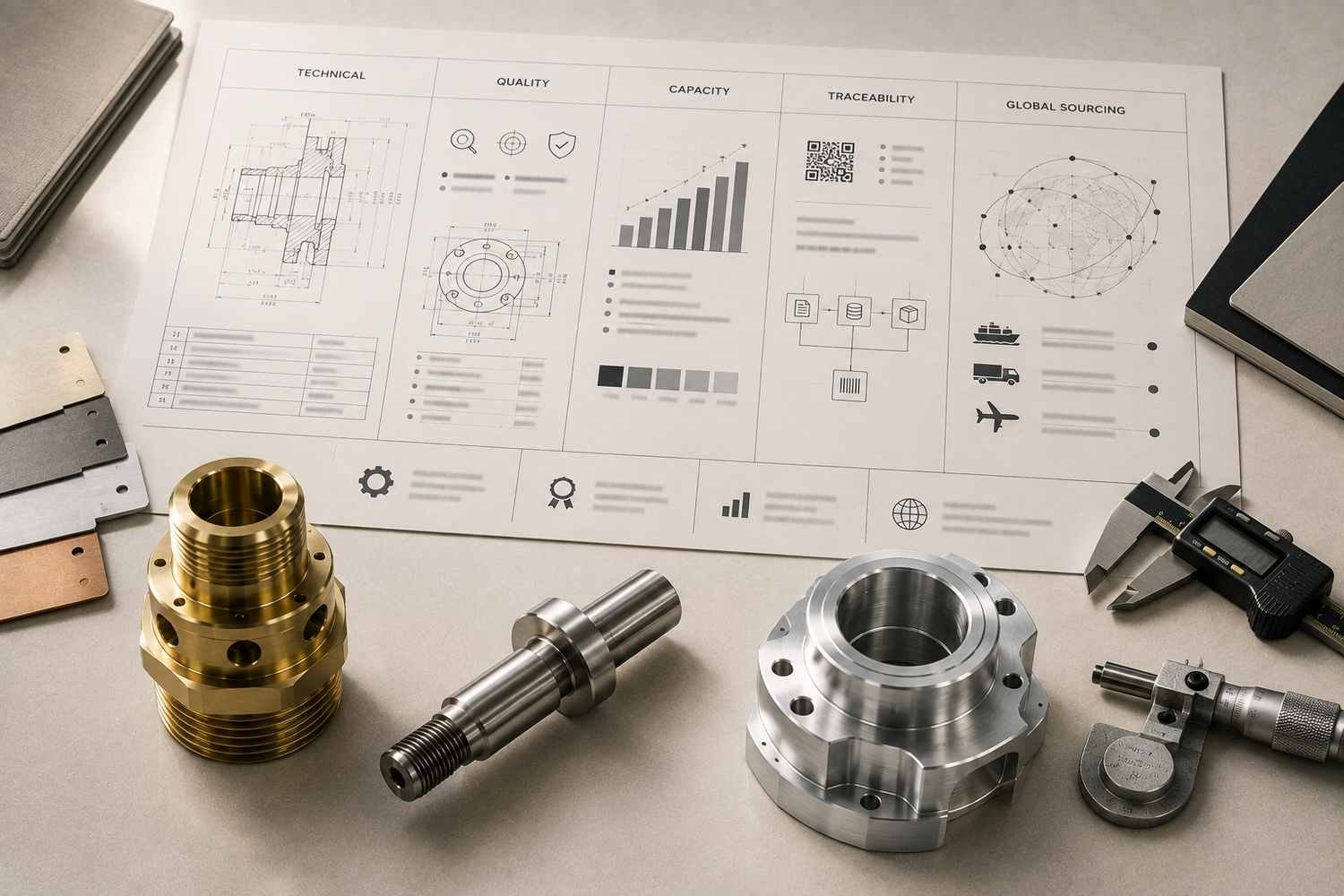
Technical capability → Quality → Capacity → Traceability → Delivery → Total landed cost
For precision metal components, the starting point should always be the actual engineering requirement.
Premi Brasscom International manufactures precision metal components in brass, copper, aluminium, steel and stainless steel for automotive, electrical, electronic and industrial applications.
For OEM and Tier-1 buyers evaluating Indian sourcing opportunities, the most useful first step is simple:
Share the component drawing, material specification or RFQ for a manufacturing-feasibility evaluation.
Current FY27 industry outlook
Fortune India — Indian auto ancillary industry FY27 outlook
Use for:
- 8–9% FY27 growth
- ₹10,681 billion projected market
- OEM demand
- higher component content
- localisation
- global sourcing
ACMA FY2025–26 industry performance
ACMA — Indian Auto Component Industry
Use for:
- industry context
- exports
- imports
- India’s global manufacturing ambition
FY2025–26 turnover
Business Standard — Indian Auto Component Industry FY26
Use for:
- ₹7.60 lakh crore
- US$85.9 billion
- 12.7% growth
PLI-Auto
Ministry of Heavy Industries — PLI Scheme for Automobile and Auto Components
Use for:
- ₹25,938 crore scheme
- advanced automotive technology
- deep localisation
- domestic/global supply chains
PLI-Auto results
Ministry of Heavy Industries Annual Report 2025–26
Use for:
- ₹44,326 crore investment
- ₹52,414 crore incremental sales
- employment
- domestic value addition context