
For OEM buyers, sourcing managers, and procurement teams in the automotive sector, the choice of a brass components manufacturer directly affects product quality, production timelines, and compliance with certification specifications. A poor supplier choice can mean rejected parts, delayed shipments, and costly rework. A reliable partner means precision-turned components that meet specifications every time.
This guide walks you through the ten factors every buyer should evaluate before selecting a brass components manufacturer in India in 2026.
1. Manufacturing Experience and Industry Expertise
Look for a manufacturer with a proven track record in automotive brass components. Years in business matter, but sector-specific experience matters more. Ask how many years they have been supplying to Tier-1 automotive customers, what types of brass parts they regularly produce, and whether they understand the certification specifications your components must meet.
2. Product Quality and Brass Material Standards
Not all brass is the same. Confirm which brass grades the manufacturer stocks and works with — such as brass, copper, aluminum, stainless steel, mild steel, steel, and gun metal — and whether they can supply material test certificates. A reliable manufacturer should be able to trace material back to its source and provide certificates matching your component specifications.
3. Manufacturing Capabilities and Technology
Evaluate the manufacturer’s production technology. CNC turning, CNC milling, forging, and machining capabilities determine the precision and repeatability of components. Ask about machine types, tolerances they can consistently achieve, and whether they handle both standard and custom designs. Manufacturers with modern CNC equipment can produce complex automotive parts with tight tolerances and high repeatability.
4. Customisation and OEM Manufacturing Capabilities
Automotive components are often customised according to customer requirements. The manufacturer should offer custom design support, prototype development, and flexible production runs — from small batches to high-volume orders. Confirm whether they can work from your drawings, samples, or specifications and adapt designs as needed.
5. Product Range
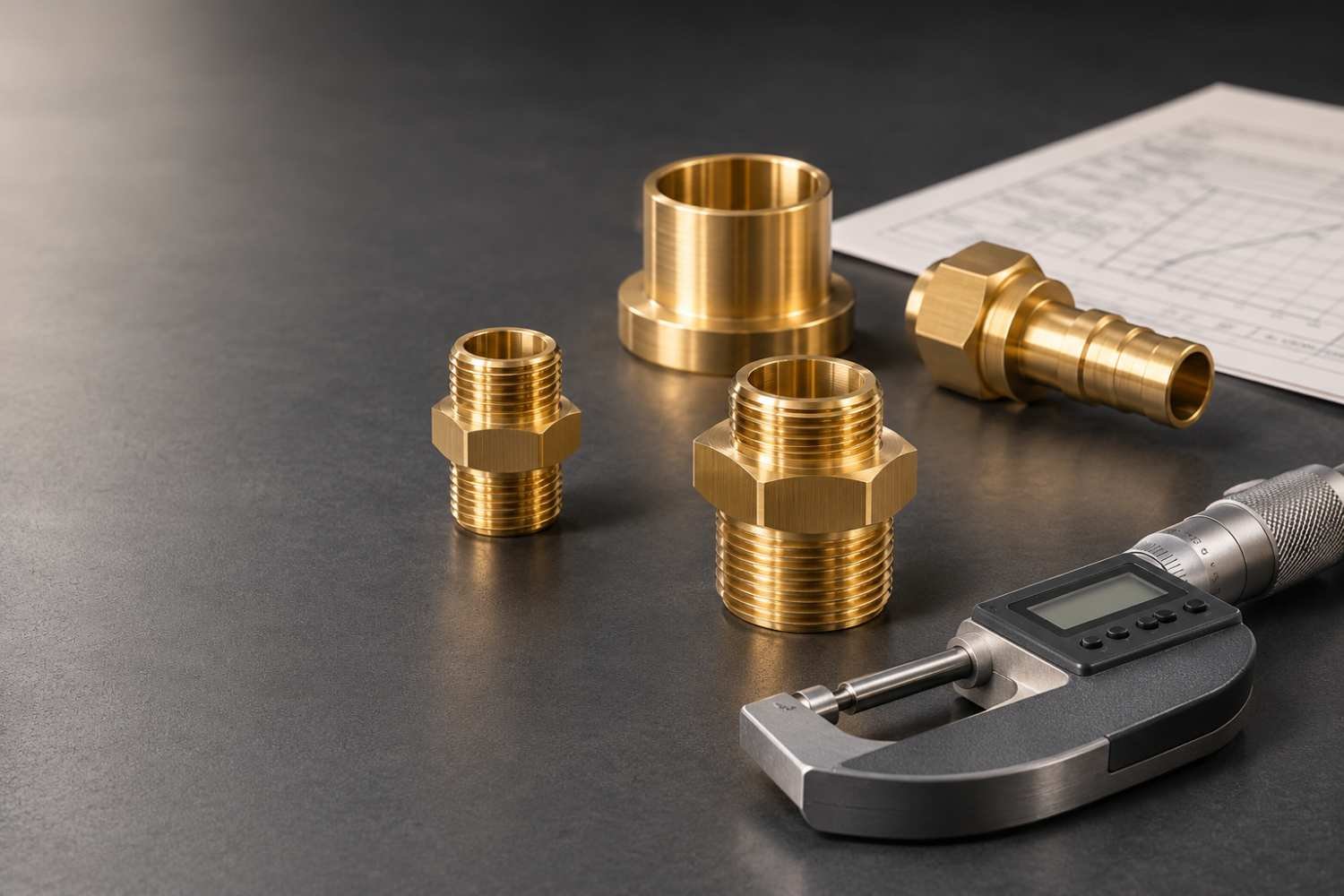
A broad product range indicates manufacturing versatility. Common brass automotive components include brass inserts, brass pipe fittings, brass fasteners, brass turned components, brass cable glands, and CNG/LPG parts. A manufacturer that produces multiple categories can often consolidate your sourcing and reduce supplier management overhead.
6. Quality Control and Testing Facilities
Quality control should happen at every stage — incoming material inspection, in-process checks, and final inspection before dispatch. Ask about testing equipment, measurement reports, and whether they provide inspection certificates with each shipment. Reliable manufacturers maintain documented quality records and welcome customer audits.
7. Certifications and Industry Compliance
Certifications are non-negotiable for automotive supply chains. Look for ISO 9001:2015 for quality management and IATF 16949 for automotive-specific quality systems. Verify that certifications are current and cover the manufacturing processes relevant to your components. Compliance with certification specifications is a baseline requirement for Tier-1 suppliers.
8. Pricing and Cost Transparency
Request detailed quotations that break down material cost, machining cost, tooling, packaging, and shipping. Transparent pricing helps you compare suppliers accurately and avoid hidden charges. Remember that the lowest price is not always the best value — factor in quality, reliability, and delivery performance.
9. Production Capacity and Delivery Reliability
Check the manufacturer’s monthly production capacity, lead times, and on-time delivery track record. Ask how they handle urgent orders and whether they have buffer capacity for demand spikes. A reliable supplier should have the capacity to scale with your growth and a logistics network for domestic and international delivery.
10. Customer Feedback and International Experience
Speak with existing customers, especially those in the automotive sector. Ask about their experience with quality, communication, and problem resolution. Manufacturers with export experience understand international packaging, documentation, and shipping requirements — critical if you source from India for global assembly plants.
Why Jamnagar, Gujarat Is a Brass Manufacturing Hub
Jamnagar is one of India’s oldest and largest brass manufacturing clusters, with a dense network of foundries, machining units, and material suppliers. Manufacturers based here benefit from proximity to raw materials, skilled labor, and established supply chains — advantages that translate into competitive pricing and shorter lead times for buyers.
Types of Brass Automotive Components You Can Source
- Brass inserts for plastic and metal assemblies
- Brass pipe fittings for fluid and gas systems
- Brass fasteners (bolts, nuts, screws, studs)
- Brass turned components for precision applications
- Brass cable glands for electrical connections
- Brass CNG/LPG parts for gas systems
Benefits of Choosing an Indian Brass Components Manufacturer
- Competitive manufacturing costs
- Custom manufacturing solutions tailored to your specifications
- Established manufacturing locations with proven infrastructure
- Multiple product categories under one roof
- International supply and export experience
- Long-term manufacturing partnership potential
Questions to Ask Before Finalising a Supplier
1. What brass grades and material certifications do you provide?
2. Can you manufacture components to our drawings and certification specifications?
3. What quality certifications do you hold (ISO 9001:2015, IATF 16949)?
4. What is your monthly production capacity and typical lead time?
5. Can you provide inspection reports and material test certificates with each shipment?
6. Do you have experience exporting to our target markets?
7. How do you handle quality issues and rework?
About Premi Brasscom International
Premi Brasscom International is a Jamnagar-based manufacturer and exporter of precision brass, copper, aluminum, stainless steel, mild steel, steel, and gun metal components. As a tier-2 automotive company, we supply brass automotive parts made to certificate specifications to tier-1 customers and customize them according to requirements. Our facility is certified to ISO 9001:2015 and IATF 16949, producing 550+ standard and 300+ custom components for domestic and international buyers.
Conclusion
Choosing the right brass components manufacturer is a strategic decision that affects quality, cost, and delivery. Use this guide to evaluate suppliers systematically, verify certifications, and request material and quality documentation before placing orders. A reliable partner delivers precision components that meet your specifications — every time.