
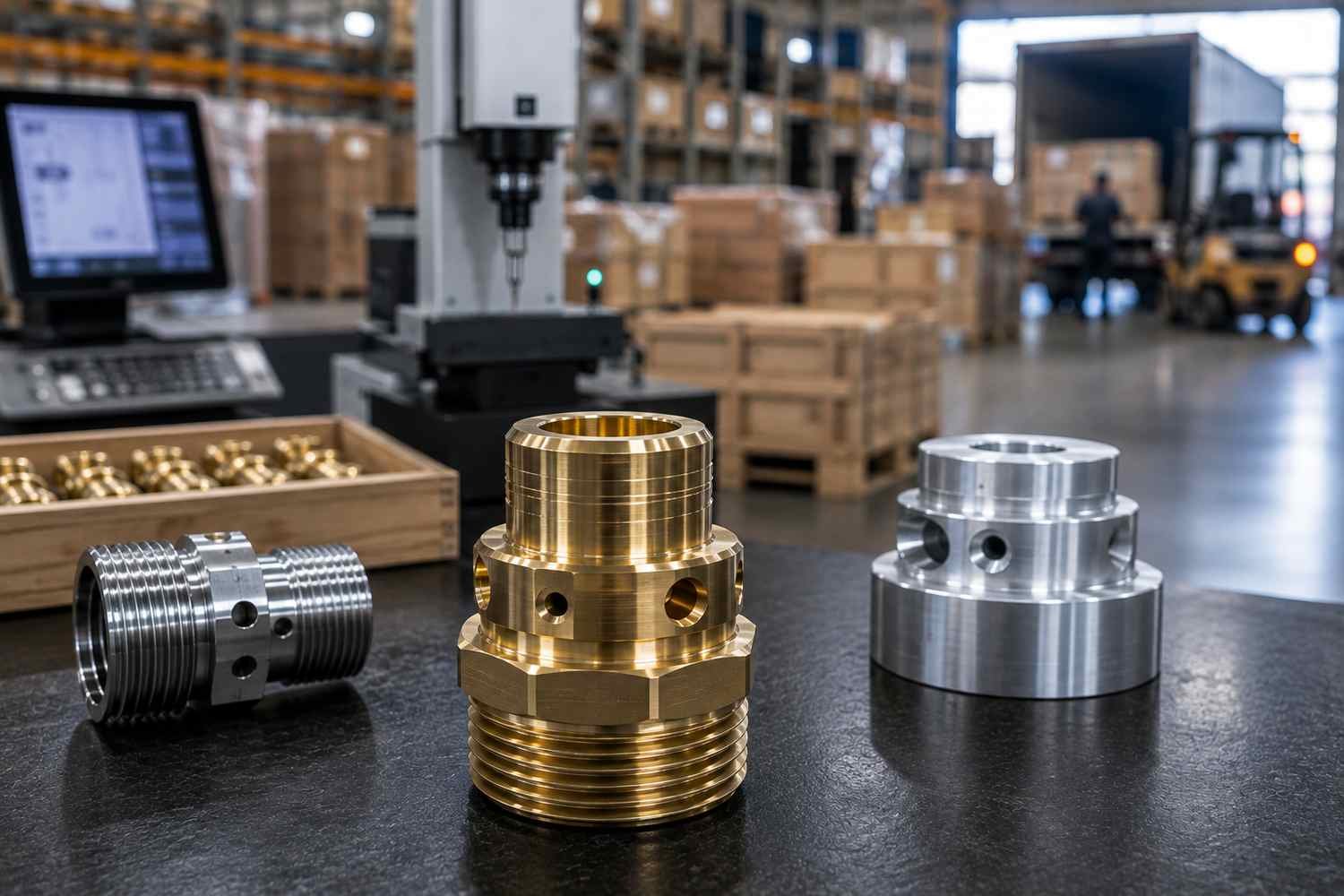
India’s Engineering Exports Are Rising: What Global OEM Buyers Should Know
Key takeaway: India’s engineering-goods exports rose 21% year-on-year to $11.48 billion in June 2026, while exports during April–June 2026 reached $34.14 billion, up 18.1%. The growth shows continued international demand for Indian engineering products despite shipping disruption and higher trade costs. For OEMs and Tier-1 procurement teams, the opportunity is to identify Indian suppliers that can combine technical capability, consistent quality, capacity, traceability and reliable delivery.
India’s engineering manufacturing sector is gaining momentum in global trade.
But the important question for international buyers is not simply whether India’s exports are increasing.
It is:
What does this growth mean for companies looking for qualified Indian engineering suppliers?
That question matters because engineering goods cover a wide range of industrial products, including machinery, electrical equipment, automotive products, metals and manufactured components.
For OEMs and Tier-1 suppliers, the growth of India’s engineering exports can mean a larger pool of potential suppliers.
But export growth alone does not qualify an individual manufacturer.
The buyer still needs to evaluate:
Quality + Technical Capability + Capacity + Delivery + Supply-Chain Reliability
What Is Driving India’s Engineering Export Growth?
India’s engineering exports are growing because demand from several international markets remains strong despite global trade uncertainty and logistics disruption.
Engineering goods exports increased 21% year-on-year to $11.48 billion in June 2026, according to data reported by EEPC India and Reuters. This was the third consecutive month in which monthly engineering exports exceeded $10 billion.
The broader April–June 2026 period was also strong.
India’s engineering exports reached approximately $34.14 billion during Q1 FY2026–27, an 18.1% increase compared with the same period a year earlier.
This matters because engineering exports are a useful indicator of India’s ability to manufacture products for demanding international markets.
Which Markets Are Buying Indian Engineering Products?
The United States remains one of India’s most important markets for engineering exports, while demand from China, Germany, Oman and other markets is also contributing to growth.
In June 2026, the United States remained India’s largest engineering-export destination, with shipments of nearly $2 billion. Exports to China increased 74% year-on-year to approximately $361.5 million.
The diversification of engineering-export destinations is important for Indian manufacturers.
A supplier that can serve several international markets is potentially exposed to a broader range of sourcing opportunities.
For buyers, it also provides evidence that India’s engineering sector is increasingly connected to international supply chains.
What Does Engineering Export Growth Mean for Global OEM Buyers?
Growing engineering exports can give global OEMs a larger pool of Indian suppliers to evaluate for sourcing and supply-chain diversification.
An OEM does not buy from a country.
It buys from a qualified supplier.
That distinction is important.
India’s export growth demonstrates that Indian manufacturers are participating in international trade, but an individual OEM still needs to evaluate:
- Manufacturing capability
- Material capability
- Dimensional control
- Quality systems
- Inspection capability
- Production capacity
- Traceability
- Delivery performance
- Export documentation
- Supply-chain resilience
- Total landed cost
Therefore, the real opportunity is not simply:
“Buy from India.”
It is:
“Identify which Indian suppliers can meet the specific technical and commercial requirements of the programme.”
Which Engineering Products Are Relevant to Global Sourcing?
Engineering goods cover a broad range of industrial products.
India’s Department of Commerce classifies engineering-related trade across areas including base metals, electronic goods, automotive and transport products, and other manufactured items. Its trade analytics platform also tracks engineering exports by commodity, destination, port and state.
For industrial procurement, relevant categories can include:
- Automotive components
- Machinery components
- Electrical equipment
- Metal components
- Precision-machined parts
- Steel products
- Aluminium products
- Copper products
- Industrial equipment components
- Fasteners
- Custom OEM components
The exact sourcing opportunity depends on the buyer’s engineering specification.
Why Are Precision Metal Components Part of This Opportunity?
Precision metal components can be attractive sourcing candidates because their requirements can often be clearly defined through engineering drawings, material specifications, tolerances and inspection criteria.
Depending on the application, manufacturers may supply:
- Brass components
- Copper components
- Aluminium components
- Steel components
- Stainless-steel components
- Precision turned components
- Inserts
- Bushings
- Shafts
- Fasteners
- Terminals
- Connectors
- Custom machined components
Not every component is suitable for every manufacturer.
The correct sourcing process begins with the customer’s drawing or sample.
What Should an OEM Check Before Sourcing a Precision Component From India?
An OEM should evaluate the supplier’s technical, quality, capacity and supply-chain capabilities before approving an Indian component manufacturer.
A practical evaluation framework is:
| Evaluation area | Buyer question |
|---|---|
| Drawing | Can the supplier manufacture the latest approved revision? |
| Material | Can the required material grade be supplied? |
| Tolerance | Can critical dimensions be maintained consistently? |
| Process | Is the manufacturing process suitable for repeat production? |
| Inspection | Can critical characteristics be measured? |
| Quality | Does the supplier operate an appropriate quality system? |
| Capacity | Can the required annual and monthly volume be supported? |
| Traceability | Can production information be traced where required? |
| Development | Can samples be developed and qualified? |
| Delivery | Can agreed lead times be maintained? |
| Export | Can international shipping and documentation be handled? |
| Commercial | Is the total landed cost competitive? |
This is a better approach than selecting a supplier solely on unit price.
Why Does Quality Matter More Than Piece Price?
A low piece price does not necessarily produce the lowest total cost for an OEM.
Consider two suppliers.
Supplier A
Offers a lower price but has:
- Higher rejection risk
- Inconsistent dimensions
- Longer development cycles
- Frequent delivery issues
- Additional incoming inspection requirements
Supplier B
Offers a competitive but slightly higher piece price while providing:
- Stable production
- Consistent dimensions
- Reliable delivery
- Better traceability
- Predictable quality
The second supplier may produce a lower total cost over the life of the programme.
This is why procurement teams should evaluate:
Total Cost of Ownership
rather than simply:
Price per piece
How Does India’s Export Growth Affect Automotive Sourcing?
India’s engineering-export growth is particularly relevant to automotive sourcing because automotive and transport products are part of India’s broader engineering trade ecosystem.
India already has an established automotive component export base.
ACMA reports that India’s auto-component industry recorded $80.2 billion turnover in FY2025, with OEM sales of $67.9 billion and exports of $22.9 billion. Major export categories included drive transmission and steering systems, engine components, suspension and braking systems, and body and chassis products.
This means an international automotive buyer considering India is not entering an undeveloped supplier market.
There is already an established supplier ecosystem.
The challenge is identifying the right supplier for the specific component.
How Does Engineering Export Growth Affect Electrical and Electronics Sourcing?
Engineering-export growth also matters for electrical and electronics supply chains because electrical machinery and engineered metal components can form part of broader industrial and electronic assemblies.
India’s Department of Commerce tracks electronic goods separately from other manufacturing categories, while engineering-export data includes electrical machinery among important export segments.
For an electronics or electrical OEM, this can create opportunities for sourcing supporting components such as:
- Terminals
- Connectors
- Inserts
- Mounting components
- Housings
- Precision fasteners
- Conductive components
- Other engineered metal parts
The exact application depends on the customer’s product design.
Is India Becoming a More Important Global Engineering Supply Base?
Yes, but export growth should not be confused with universal supplier competitiveness.
EEPC India reported that India’s engineering exports reached a monthly record of $12.3 billion in May 2026, with growth across segments including copper, aluminium, iron and steel, two- and three-wheelers, railway equipment, machine tools, motor vehicles and electrical machinery.
This suggests that India’s engineering-export base is broad rather than dependent on a single product category.
For global procurement teams, that creates a larger ecosystem from which to identify potential suppliers.
However, international buyers still need to qualify individual manufacturers.
What Is the Role of Supply-Chain Diversification?
Supply-chain diversification is becoming more important because global manufacturers are dealing with geopolitical uncertainty, trade restrictions and shipping disruption.
Recent reporting on India’s engineering exports noted that higher freight, insurance and transit costs have affected exporters following disruptions around the Red Sea and Strait of Hormuz.
This creates a difficult procurement environment.
A supplier may be technically excellent but commercially less attractive if shipping costs or delivery routes become unreliable.
Therefore, buyers should evaluate:
- Supplier location
- Port access
- Freight routes
- Shipping frequency
- Packaging
- Lead time
- Buffer inventory requirements
- Alternative logistics options
The best sourcing decision considers the complete supply chain, not just the factory.
What Is Total Landed Cost?
Total landed cost is the complete cost of receiving a component at the buyer’s required location.
A simple model is:
Component price
Packaging
Freight
Insurance
Duties and tariffs
Customs and other applicable charges
=
Total landed cost
This is particularly important when comparing suppliers from different countries.
A supplier with a lower factory price may not have the lower landed cost.
What Should Global Buyers Ask an Indian Supplier?
Before requesting a formal quotation, a procurement team should provide as much technical information as possible.
A useful RFQ package includes:
- Engineering drawing
- Drawing revision
- Material specification
- Surface-finish requirement
- Annual quantity
- Monthly quantity
- Packaging requirement
- Quality requirements
- Inspection requirements
- Target delivery location
- Development timeline
- Required certifications
The better the RFQ information, the more accurately a supplier can evaluate feasibility and pricing.
What Should Indian Suppliers Include in an International RFQ Response?
An Indian supplier should provide more than a unit price when responding to a serious OEM or Tier-1 RFQ.
A strong response can include:
- Drawing feasibility
- Material confirmation
- Manufacturing process overview
- Sample-development timeline
- Inspection approach
- Production capacity
- Lead time
- Packaging approach
- Commercial quotation
- Relevant quality documentation
This helps the buyer evaluate the supplier as a potential long-term manufacturing partner.
Why Are Brass, Copper, Aluminium and Steel Important?
Brass
Brass can be relevant to selected electrical and mechanical applications because of its machinability and electrical and corrosion-related properties.
Potential applications can include:
- Terminals
- Connectors
- Inserts
- Electrical fittings
- Precision-machined parts
Copper
Copper is relevant where electrical conductivity is important.
Potential applications can include:
- Conductive components
- Electrical connections
- Terminals
- Selected industrial components
Aluminium
Aluminium can be relevant where low weight and specified thermal or mechanical characteristics are important.
Potential applications can include:
- Housings
- Mounting parts
- Structural components
- Precision-machined components
Steel and Stainless Steel
Steel and stainless steel can be selected where strength, durability or corrosion resistance are important.
Potential applications include:
- Shafts
- Fasteners
- Mounting parts
- Mechanical interfaces
- Industrial components
The correct material should always be selected according to the customer’s engineering requirements.
What Does Export Growth Mean for Indian Precision Manufacturers?
Growing engineering exports create more opportunities, but they also raise the standard that Indian suppliers must meet.
International buyers are not simply looking for additional production capacity.
They are looking for suppliers capable of delivering consistent performance.
That means Indian manufacturers need to compete on:
Quality
Repeatability
Technical capability
Production capacity
Delivery
Traceability
Commercial competitiveness
Supply-chain reliability
This is particularly important for components that become part of an OEM’s or Tier-1 supplier’s production system.
Example: How an OEM Could Evaluate an Indian Precision Component Supplier
Consider a hypothetical automotive Tier-1 supplier looking for a new source for a custom-machined aluminium component.
The buyer could evaluate:
| Requirement | What to verify |
|---|---|
| Drawing | Latest approved drawing |
| Material | Specified aluminium grade |
| Critical dimensions | Drawing tolerances |
| Annual volume | Programme requirement |
| Manufacturing | Supplier’s process capability |
| Inspection | Measurement method |
| Quality | Customer requirements |
| Sample | Development and approval process |
| Capacity | Available production capacity |
| Delivery | Required lead time |
| Logistics | Freight and delivery route |
| Commercial | Total landed cost |
| Traceability | Required production records |
This is an illustrative sourcing framework and does not represent a specific Premi Brasscom customer programme. Actual supplier qualification should be based on the customer’s engineering, quality and commercial requirements.
What Is the Opportunity for Premi Brasscom International?
Premi Brasscom International operates in precision metal components across brass, copper, aluminium, steel and stainless-steel materials, with applications including automotive, electrical, electronic and industrial requirements.
The current growth in Indian engineering exports is therefore commercially relevant.
But the strongest positioning is not:
“India is growing, so buy from us.”
It is:
“If you have a defined component requirement, evaluate the Indian manufacturing option against your technical, quality, capacity and commercial criteria.”
The appropriate sourcing process is:
Drawing / Sample
↓
Manufacturing Feasibility
↓
Sample Development
↓
Inspection / Qualification
↓
Production
↓
Repeat Supply
That is the type of process an international procurement team can evaluate.
What Should Global OEMs Do Next?
For buyers considering India as a manufacturing source, a practical first step is to identify components that:
- Have stable demand
- Have clearly defined specifications
- Can be manufactured using established processes
- Have measurable quality characteristics
- Have sufficient annual volume
- Are suitable for supplier qualification
- Have manageable logistics requirements
The buyer can then request quotations from qualified Indian suppliers and compare:
Technical capability + Quality + Capacity + Delivery + Total Landed Cost
rather than comparing unit prices alone.
Frequently Asked Questions
Are India’s engineering exports growing in 2026?
Yes. India’s engineering-goods exports rose 21% year-on-year to $11.48 billion in June 2026, while April–June exports reached approximately $34.14 billion, up 18.1%.
Which countries buy Indian engineering products?
The United States is a major destination for Indian engineering exports. China, Germany, Oman and other international markets also contribute significantly to demand.
Can global OEMs source precision metal components from India?
Yes. Global OEMs can evaluate Indian suppliers for precision metal components based on their specific drawings, materials, tolerances, quality requirements, capacity and commercial conditions.
What precision metal components can be sourced from India?
Potential categories include brass, copper, aluminium, steel and stainless-steel components, precision turned parts, inserts, fasteners, shafts, bushings, terminals and other engineered components, depending on the application.
Why should OEMs consider Indian component suppliers?
India has an established engineering and automotive manufacturing ecosystem and a growing export base, providing international buyers with a broader pool of potential suppliers.
What should an OEM check before approving an Indian component supplier?
The buyer should evaluate manufacturing capability, material capability, dimensional control, inspection, quality systems, capacity, traceability, delivery, export capability and total landed cost.
Is India suitable for automotive component sourcing?
India already has a substantial automotive component manufacturing and export ecosystem. ACMA reported $22.9 billion of auto-component exports in FY2025.
Are brass and copper components relevant to international sourcing?
Yes, selected brass and copper components can be used in electrical, automotive and industrial applications where their properties and the customer’s engineering requirements make them suitable.
Does a lower Indian factory price always mean lower sourcing cost?
No. Freight, insurance, duties, customs, packaging and other logistics costs can change the total landed cost.
How can a global buyer start sourcing from an Indian precision manufacturer?
The most practical starting point is to provide a drawing or sample, material specification, annual volume and quality requirements so the supplier can evaluate manufacturing feasibility and prepare a quotation.
Conclusion
India’s engineering export performance in 2026 provides an important signal for global procurement teams.
Engineering exports rose 21% year-on-year in June to $11.48 billion, while the first quarter of FY2026–27 reached approximately $34.14 billion, up 18.1%.
The growth is occurring despite higher freight, insurance and transit costs caused by global shipping disruption.
For global OEMs and Tier-1 suppliers, that means India’s engineering ecosystem deserves to be evaluated not simply as a low-cost manufacturing destination, but as a potential qualified supply-chain partner.
The real test remains supplier-specific:
Quality + Technical Capability + Repeatability + Capacity + Delivery + Total Landed Cost
For Indian precision manufacturers, the opportunity is significant—but so is the responsibility to meet international procurement standards consistently.
Premi Brasscom International manufactures precision metal components in brass, copper, aluminium, steel and stainless steel for automotive, electrical, electronic and industrial applications.
International buyers can share a component drawing, sample, material specification or sourcing requirement for manufacturing-feasibility evaluation.
EEPC India
EEPC India — Engineering Export Information
Use for:
- May 2026 record engineering exports
- metals
- machinery
- motor vehicles
- electrical machinery
- global-market diversification
Reuters engineering-export report
Reuters — India’s engineering exports jump 21% in June 2026
Use for:
- June $11.48B engineering exports
- 21% YoY growth
- China/US/Germany/Oman demand
- freight and shipping pressures
Department of Commerce trade data
Department of Commerce — Trade Intelligence & Analytics Portal
Use for:
- engineering trade data
- commodity classifications
- export destinations
- state/port data
ACMA
ACMA — Indian Automotive Component Industry Data
Use for:
- auto-component turnover
- OEM sales
- auto-component exports
- major export categories
Current export statistics
Government of India — Monthly Foreign Trade Statistics
Use as the primary government data source when checking commodity-level export figures.
- Are India’s engineering exports growing in 2026?
- Which countries buy Indian engineering products?
- Can global OEMs source precision metal components from India?
- What precision metal components can be sourced from India?
- Why should OEMs consider Indian component suppliers?
- What should an OEM check before approving an Indian component supplier?
- Is India suitable for automotive component sourcing?
- Are brass and copper components relevant to international sourcing?
- Does a lower Indian factory price always mean lower sourcing cost?
- How can a global buyer start sourcing from an Indian precision manufacturer?