
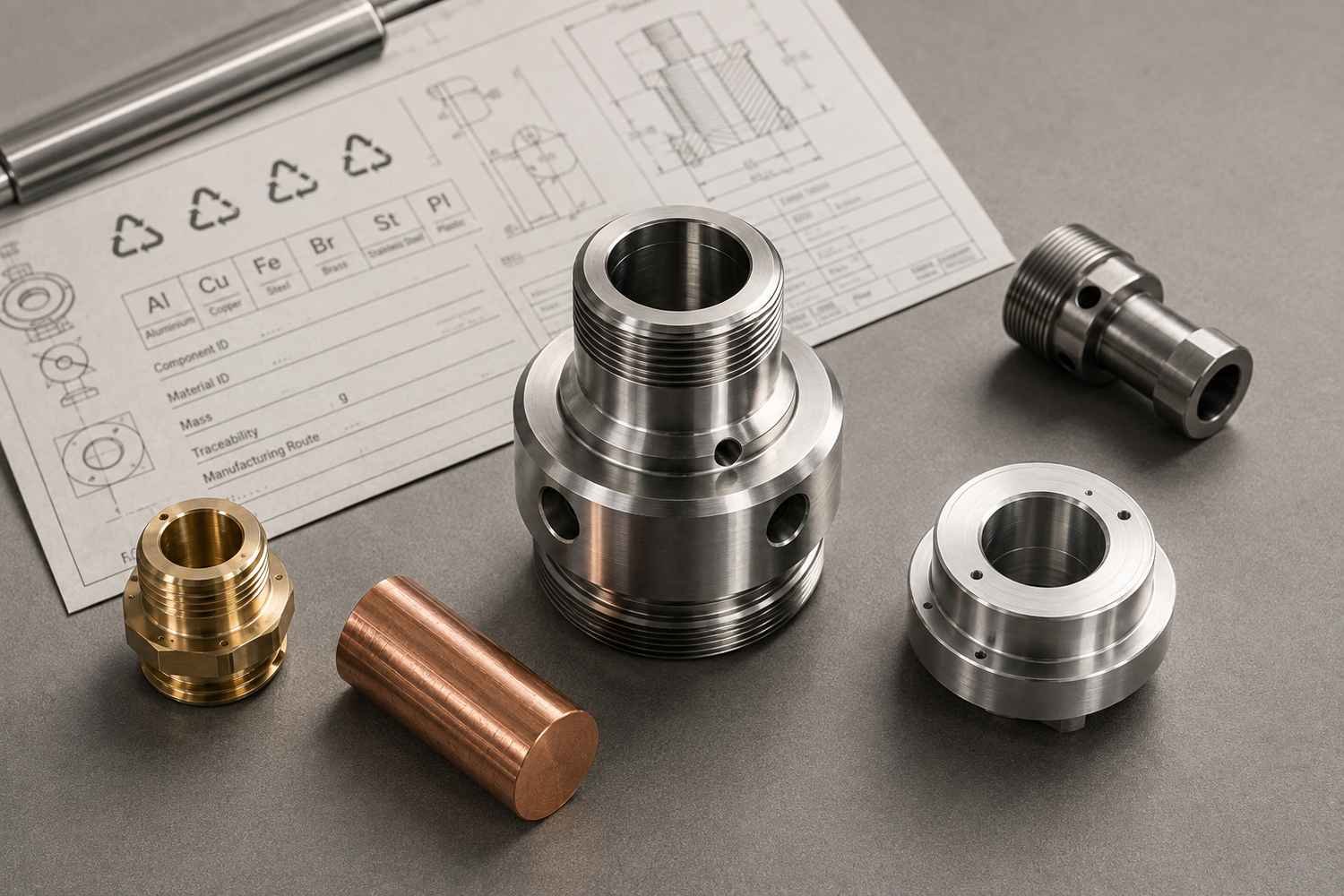
EU’s New Vehicle Circularity Rules: What Indian Auto-Component Suppliers Need to Know
Key takeaway: The European Union has adopted new vehicle-circularity rules that extend requirements across vehicle design, production, material information and end-of-life management. For automotive manufacturers and their suppliers, the important change is not simply recycling at the end of a vehicle’s life. The regulation increases the importance of material data, supplier information, component identification, recyclability and supply-chain traceability.
The automotive supply chain is entering a new phase.
For years, automotive supplier discussions focused heavily on:
- cost
- quality
- delivery
- capacity
- localisation
- technical capability
Those requirements are not going away.
But European automotive programmes are adding another dimension:
circularity and material information.
In July 2026, the European Union published Regulation (EU) 2026/1738, establishing new requirements covering vehicle design, production, reusability, recyclability, recoverability, recycled content and end-of-life vehicle management.
For Indian automotive component manufacturers supplying directly or indirectly into European vehicle programmes, this development deserves attention.
Not because every requirement applies immediately.
But because the direction of OEM sourcing is changing.
What Is the EU Vehicle Circularity Regulation?
The EU vehicle circularity regulation establishes requirements intended to make vehicles easier to reuse, recycle and recover throughout their lifecycle.
Regulation (EU) 2026/1738 covers areas including:
- vehicle design
- vehicle production
- reusability
- recyclability
- recoverability
- recycled content
- information and labelling
- component and material identification
- supply-chain information
- extended producer responsibility
- end-of-life vehicle treatment
The regulation replaces the previous EU framework under Directives 2000/53/EC and 2005/64/EC.
The important point for component suppliers is that circularity is being considered earlier in the vehicle lifecycle.
It is no longer only a recycling-company issue.
Why Does This Matter to Auto-Component Suppliers?
The regulation matters because vehicle manufacturers will need better information from their suppliers about the materials and components used in vehicles.
The regulation requires manufacturers to collect relevant data throughout the supply chain and establish procedures to verify the accuracy and completeness of information received from suppliers.
That means the supplier relationship can increasingly involve questions such as:
- What material is used?
- What is the material mass?
- What component is it?
- Can the material be identified?
- Can the component be separated?
- Is recycled content used?
- What information can the supplier provide?
- Can the information be verified?
- Can the supplier maintain consistent records?
For a Tier-2 component manufacturer, this means manufacturing data can become part of the commercial relationship, not merely an internal production record.
Is the EU Regulation Already Applicable to Every Automotive Component?
No. This is an important distinction.
The regulation is legally in force, but different provisions have different application dates.
For example, the regulation states that vehicle types type-approved from 1 September 2032 must be designed to be reusable or recyclable to a minimum of 85% by mass and reusable or recoverable to a minimum of 95% by mass.
The regulation also provides for a Digital Circularity Vehicle Passport from 1 September 2032 for vehicles placed on the EU market.
Therefore, suppliers should not interpret the regulation as:
“Every Indian component manufacturer must immediately become fully circular.”
That would be inaccurate.
The better interpretation is:
European automotive programmes are moving toward greater circularity, material transparency and supply-chain data requirements.
Suppliers should prepare accordingly.
What Does the Regulation Mean by Circularity?
Circularity means designing and managing products so that materials and components can remain useful for longer through reuse, repair, remanufacturing, recycling or recovery.
In automotive manufacturing, circularity can involve:
- designing components for easier removal
- improving recyclability
- identifying materials
- using recycled content
- recovering valuable materials
- reducing difficult-to-separate material combinations
- improving supply-chain information
- supporting end-of-life treatment
The EU regulation specifically connects vehicle design with end-of-life treatment.
That creates a direct link between engineering decisions made during vehicle development and what happens to the vehicle years later.
Why Are Steel, Aluminium and Copper Important?
Steel, aluminium and copper are particularly relevant because they are major materials used throughout modern vehicles and are specifically connected to the EU’s circularity objectives.
The regulation notes that automotive manufacturing is a major user of primary aluminium, steel and plastics, while vehicle electrification is increasing the use and complexity of electronics and demand for materials such as copper and rare-earth elements.
For component manufacturers, this makes material information increasingly important.
A component supplier may therefore need to know:
| Material area | Information that may become increasingly important |
|---|---|
| Steel | Grade, composition, mass, identification |
| Stainless steel | Grade, composition, mass, identification |
| Aluminium | Alloy, mass, identification |
| Copper | Alloy, mass, identification |
| Brass | Alloy/material information, mass, identification |
| Other materials | Composition and identification where required |
The exact data requirements depend on the applicable vehicle programme and regulatory implementation.
Why Does Material Traceability Matter?
Material traceability allows manufacturers to demonstrate what was used in a component and where the information came from.
For OEMs, this can become important because vehicle circularity calculations depend on information from multiple levels of the supply chain.
Imagine a vehicle component supplied through:
OEM
↓
Tier-1
↓
Tier-2
↓
Raw-material supplier
The OEM may need information originating much deeper in the supply chain.
That means a Tier-2 supplier may increasingly need to provide reliable information to its Tier-1 customer.
This does not necessarily mean that every supplier needs an expensive digital system immediately.
But it does mean that accurate and organised production records become more valuable.
What Does the Regulation Say About Suppliers?
The regulation explicitly recognises that automotive manufacturers depend on a large number of suppliers, including SMEs, and requires information to be collected across the supply chain.
It also acknowledges that SMEs may have limited administrative resources and technical tools for generating and verifying detailed material-composition or environmental data.
This is important.
The EU is not treating the automotive supply chain as if every supplier were a large multinational.
But OEMs will still need reliable information.
That creates an opportunity for suppliers that can provide:
- organised records
- consistent material documentation
- component identification
- traceability
- inspection records
- controlled production information
- supplier documentation
Does This Mean More Documentation for Tier-2 Suppliers?
Potentially, yes.
The exact documentation requirements will depend on the OEM, Tier-1 supplier, component and applicable regulatory provisions.
But the direction is clear.
A supplier may increasingly be asked to provide information beyond:
“Part number + quantity + invoice”
The information environment can move toward:
Part + material + mass + identification + supporting documentation + traceability
That is particularly relevant for suppliers involved in European automotive supply chains.
What Should Indian Component Suppliers Prepare?
Indian suppliers targeting European automotive programmes should start strengthening their material and component data discipline before customers formally require it.
A practical preparation checklist includes:
- Maintain the latest drawing revision.
- Record the material grade used for production.
- Maintain material certificates where required.
- Maintain batch or lot traceability where required.
- Record production quantities.
- Maintain inspection records.
- Keep outsourced-process information organised.
- Maintain supplier documentation.
- Keep component identification consistent.
- Ensure customer documentation can be retrieved when required.
This is not a claim that every item above is mandated immediately by Regulation 2026/1738.
It is a practical supplier-readiness approach.
How Could This Affect Precision Metal Components?
Precision metal components can be directly relevant because many automotive parts are manufactured from steel, stainless steel, aluminium, copper, brass and other engineered materials.
Potential component categories include:
- Precision turned components
- Shafts
- Bushings
- Inserts
- Fasteners
- Terminals
- Connectors
- Mounting components
- Aluminium components
- Copper components
- Brass components
- Steel components
- Stainless-steel components
The regulation does not mean every one of these parts automatically requires a new manufacturing process.
Instead, it increases the importance of understanding:
What is the component made from?
How much material does it contain?
Can the material be identified?
Can the relevant information be provided to the customer?
What About Brass Components?
Brass components can be relevant to the circularity discussion because brass is a copper-based alloy used in selected automotive, electrical and industrial applications.
For a brass component supplier, material information can include the applicable alloy designation and supporting material documentation where required by the customer.
Potential applications may include:
- Terminals
- Connectors
- Inserts
- Electrical fittings
- Precision-machined components
The exact requirements depend on the customer’s specification and the component’s application.
What About Copper Components?
Copper is particularly relevant to modern vehicles because electrification and increased electronics can increase the importance of conductive materials.
The EU regulation itself identifies copper among materials whose use is relevant to the changing material footprint of vehicles.
For suppliers of copper components, customers may increasingly care about:
- material grade
- component mass
- identification
- traceability
- documentation
- recycled content where applicable
Again, the exact requirement depends on the vehicle programme and applicable rules.
What About Aluminium?
Aluminium is important because it combines low density with applications across vehicle structures, housings and engineered components.
As vehicles become more electrified and manufacturers continue managing vehicle weight, aluminium remains an important engineering material.
The EU regulation identifies aluminium as one of the major materials used in automotive manufacturing and provides a framework for future consideration of recycled steel, aluminium, magnesium and critical raw materials.
For aluminium component suppliers, this makes alloy identification, material documentation and component information increasingly relevant.
What About Steel and Stainless Steel?
Steel will remain one of the most important automotive materials, but circularity requirements can increase the importance of knowing what type of material enters the vehicle supply chain.
Potential precision applications include:
- Shafts
- Fasteners
- Pins
- Bushings
- Mechanical interfaces
- Mounting components
- Structural components
For suppliers, material identification and documentation can therefore become more important during customer qualification and ongoing supply.
Will Recycled Content Become More Important?
Yes, the EU is moving toward greater use of recycled content, although the specific targets and implementation dates differ by material and vehicle requirement.
The Council of the EU states that the new regulation introduces a target for recycled plastic in new vehicles: at least 15% after six years from entry into force, rising to 25% after ten years, with at least 20% of the recycled plastic coming from end-of-life vehicles.
For metals, the regulation provides for further work and future targets relating to recycled steel, aluminium, magnesium and critical raw materials following feasibility assessments.
This means metal suppliers should watch future developments rather than assuming today’s requirements are the final position.
Will OEMs Need More Information From Tier-2 Suppliers?
Very likely, particularly where component and material information feeds into vehicle-level compliance or circularity calculations.
The regulation requires vehicle manufacturers to collect relevant information through the full supply chain and establish procedures to verify information received from suppliers.
A simplified information flow could become:
Raw-material supplier
↓
Component supplier
↓
Tier-1
↓
OEM
↓
Vehicle circularity calculation
This makes reliable supplier data increasingly valuable.
What Should an OEM Ask an Indian Precision Component Supplier?
A European OEM or Tier-1 supplier evaluating an Indian component source could reasonably assess:
| Area | Buyer question |
|---|---|
| Material | What exact material grade is used? |
| Documentation | Can material evidence be provided? |
| Traceability | Can the production batch be traced? |
| Mass | Can component weight be measured and controlled? |
| Drawing | Is the current drawing revision controlled? |
| Process | Is the manufacturing process stable? |
| Inspection | Can critical dimensions be verified? |
| Outsourcing | Are external processes documented? |
| Quality | Is the quality system appropriate? |
| Capacity | Can programme volume be supported? |
| Data | Can requested supplier information be provided consistently? |
| Delivery | Can export schedules be maintained? |
This is a useful way to think about the regulation from a procurement perspective.
Does This Regulation Apply Only to European Manufacturers?
No. The regulation concerns vehicles placed on the EU market, so the supply-chain implications can extend beyond companies physically located inside the EU.
The regulation covers vehicles and end-of-life vehicles within its defined scope and establishes requirements connected to vehicles placed on the Union market.
Therefore, an Indian supplier may not be the regulated entity in the same way as an EU vehicle manufacturer, but its information and component supply can become relevant to the customer’s compliance obligations.
This distinction matters.
Customer compliance requirements can flow down the supply chain even when the supplier is outside the EU.
Does This Create a New Opportunity for Indian Suppliers?
Yes, but the opportunity is not simply “green manufacturing.”
The stronger opportunity is:
supplier readiness.
European OEMs and Tier-1 suppliers need suppliers that can provide:
- technically consistent components
- accurate material information
- reliable documentation
- traceability
- repeatable quality
- stable production
- responsive supplier communication
That can become a competitive advantage.
A supplier that cannot provide basic material and production information may become harder to qualify for programmes with increasingly demanding data requirements.
What Should Indian Precision Manufacturers Do Now?
A sensible approach is to begin with basic supplier-data discipline.
Step 1 — Standardise material information
Keep material grades and supplier certificates organised.
Step 2 — Strengthen traceability
Ensure production records can be connected to the relevant batch or order where required.
Step 3 — Control drawing revisions
Avoid producing against outdated customer drawings.
Step 4 — Record component information
Maintain accurate component weight and material information where relevant.
Step 5 — Organise outsourced processes
Maintain records for processes such as plating, heat treatment or other customer-required operations where applicable.
Step 6 — Improve document retrieval
Customer records should be retrievable without searching through disconnected files.
Step 7 — Monitor European customer requirements
Different OEMs and Tier-1 suppliers may introduce their own requirements before all regulatory provisions become applicable.
What Does This Mean for Premi Brasscom International?
Premi Brasscom International manufactures precision metal components in:
- Brass
- Copper
- Aluminium
- Steel
- Stainless steel
with applications including automotive, electrical, electronic and industrial requirements.
That makes the EU’s move toward greater material transparency and circularity relevant to the company’s target markets.
However, Premi should not make an unsupported claim such as:
“Premi is already fully compliant with the EU Vehicle Circularity Regulation.”
That would be too broad.
A more credible position is:
As European automotive supply chains place increasing importance on material information, traceability and supplier documentation, Indian precision-component manufacturers should prepare their production and quality records to meet evolving customer requirements.
For Premi, the practical focus should remain:
Customer drawing
↓
Material specification
↓
Manufacturing feasibility
↓
Production
↓
Inspection
↓
Traceability / documentation
↓
Repeat supply
This is the supplier-development process international procurement teams understand.
What Should European Buyers Look for in Indian Component Suppliers?
European buyers should evaluate Indian suppliers on both manufacturing capability and information discipline.
A strong supplier should be able to demonstrate:
Technical capability
Can the supplier manufacture the required geometry?
Material capability
Can the supplier consistently work with the required material?
Quality
Can the supplier measure and control critical characteristics?
Traceability
Can production information be connected to the supplied component or batch where required?
Documentation
Can relevant material and inspection information be retrieved?
Capacity
Can the supplier support the required production volume?
Delivery
Can the supplier support international delivery schedules?
Commercial capability
Can the supplier remain competitive after logistics and other applicable costs?
This is a more realistic definition of an export-ready automotive supplier.
Frequently Asked Questions
What is the EU Vehicle Circularity Regulation?
Regulation (EU) 2026/1738 establishes EU requirements covering vehicle circularity, including design, production, reusability, recyclability, recoverability, recycled content, information and end-of-life vehicle management.
Is the EU Vehicle Circularity Regulation already in force?
Yes. Regulation (EU) 2026/1738 was signed on 8 July 2026, published on 24 July 2026 and is listed as in force by EUR-Lex. However, many substantive requirements apply from later dates.
Does the regulation immediately apply to every Indian auto-component supplier?
No. The regulation has different application dates and obligations. Indian suppliers can nevertheless be affected indirectly when their components or material information form part of vehicles placed on the EU market.
What does the regulation mean for automotive suppliers?
It increases the importance of material information, component identification, supply-chain data, recyclability and verification of information supplied by component manufacturers.
Will OEMs need more material information from suppliers?
The regulation requires vehicle manufacturers to collect relevant information throughout the supply chain and establish procedures to verify supplier information.
Are steel and aluminium relevant to the new EU vehicle rules?
Yes. The regulation specifically addresses the automotive industry’s use of aluminium and steel and provides for future work relating to recycled steel, aluminium, magnesium and critical raw materials.
Is copper relevant to EV and automotive circularity?
Yes. The regulation identifies copper as an important material whose use can increase as vehicles become more electrified and electronically complex.
Will recycled content become more important for vehicles?
Yes. The regulation establishes future recycled-plastic requirements and provides for further work concerning recycled steel, aluminium, magnesium and critical raw materials.
What is the Digital Circularity Vehicle Passport?
It is a digital information framework for vehicles covered by the regulation. The regulation provides for a Digital Circularity Vehicle Passport from 1 September 2032 for vehicles placed on the EU market.
What should an Indian precision component manufacturer prepare?
Manufacturers targeting European automotive supply chains should strengthen material documentation, component identification, traceability, drawing control, inspection records and the ability to provide accurate supplier information.
Does the regulation mean Indian suppliers must immediately use recycled metals?
Not necessarily. The regulation contains different requirements, timelines and future assessments. Suppliers should monitor customer-specific requirements and future EU implementing measures rather than assuming a single immediate recycled-metal mandate.
Can material traceability become a competitive advantage?
Yes. As OEMs need better supply-chain information, suppliers that can provide accurate and verifiable material and production information can be easier to qualify and manage.
Conclusion
The European automotive industry is moving beyond traditional recycling targets.
The new EU Vehicle Circularity Regulation connects vehicle design, manufacturing, supplier information and end-of-life treatment into a more integrated framework.
For automotive suppliers, one of the most important changes is the growing importance of information.
The future sourcing question may not be only:
“Can you manufacture this component?”
It may increasingly become:
“Can you manufacture it consistently and provide the material and supply-chain information required by the programme?”
For Indian precision-component manufacturers, that means preparation should begin before customer requirements become urgent.
Material documentation.
Component identification.
Traceability.
Inspection records.
Controlled drawings.
Reliable supplier records.
These are becoming part of the broader definition of an export-ready automotive supplier.
Premi Brasscom International manufactures precision metal components in brass, copper, aluminium, steel and stainless steel for automotive, electrical, electronic and industrial applications.
For international buyers evaluating Indian precision-component sourcing, a component drawing, material specification or sample can be shared for manufacturing-feasibility evaluation.
1. Primary legal source — EUR-Lex
Regulation (EU) 2026/1738 — EUR-Lex
This should be your primary citation.
Use it for:
- regulation number
- 8 July 2026 adoption/signature
- 24 July 2026 publication
- scope
- 85% / 95% requirements
- supplier information
- material identification
- Digital Circularity Vehicle Passport
- application dates
2. European Commission
European Commission — End-of-Life Vehicles
Use for:
- background
- current ELV framework
- steel/aluminium/copper relevance
- hazardous-substance context
3. Council of the European Union
Council of the EU — New rules for a more circular automotive sector
Use for:
- recycled plastic targets
- future recycled-material work
- automotive circularity policy
4. NITI Aayog
NITI Aayog — Automotive Industry and Global Value Chains
Use for the India-side context around:
- automotive global value chains
- India’s component exports
- supplier competitiveness
- global integration
5. ACMA
Use ACMA’s current industry data for India’s auto-component industry context rather than relying on generic news reports.